


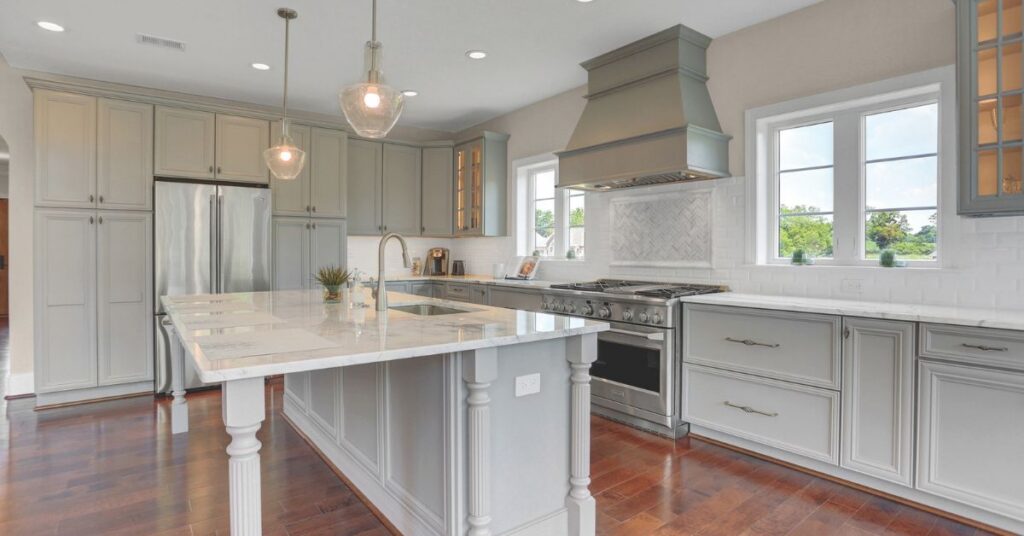
Molding is a decorate trim that hides awkward gaps between cabinets and nearby surfaces, giving your kitchen a polished, finished look. Without it, dust and debris can sneak into exposed crevices, making cleaning a bigger hassle than it needs to be. Bare edges and sharp corners are also more likely to get dinged up, which can make your cabinets look worn out faster. See how these eight different types of molding for cabinets create a seamless, elegant design.
Scribe Molding
Scribe molding is a thin, flexible piece of trim used to cover gaps where cabinets meet walls or ceilings that aren’t perfectly straight. It’s commonly installed along the edges of cabinets to create a seamless transition, especially in older homes where walls may not be perfectly straight.
Cabinet installers carefully measure and cut scribe molding to match the exact contours of the surface it will cover, ensuring a seamless fit. They use fine-tooth saws or utility knives to trim the molding, then sand to refine the edges. Once prepared, they secure the molding using finishing nails or adhesive. The molding is typically painted or stained to match the cabinets.
Crown Molding
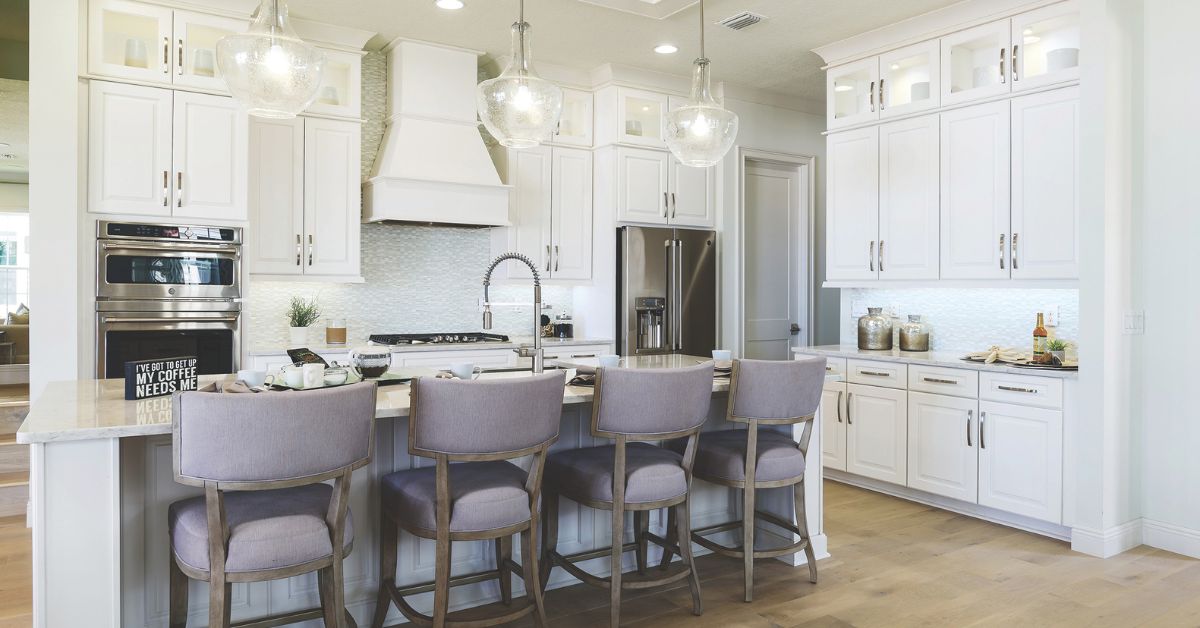
Crown molding sits at the very top of upper cabinets, serving as the crowning jewel that draws the eye upward toward the ceiling. In some kitchens, this classic trim bridges the gap between the cabinet and the ceiling. Or it may finish off the cabinet top for a clean, sophisticated look. Crown molding’s angled profile adds depth and shadow lines, making standard cabinetry feel more substantial and integrated in the room’s architecture.
Designers frequently recommend crown molding for tailored cabinets because it works beautifully in both traditional and transitional kitchen layouts. You can choose from simple, sleek profiles for a modern touch or intricate, multi-layered designs that echo historical architectural styles.
Stacking Molding
Sometimes a single piece of molding doesn’t provide enough visual weight for a room with high ceilings or grand proportions. By stacking multiple pieces of molding together, you create a custom, built-in appearance that commands attention. This technique involves combining a baseboard-style piece, a flat filler, and a traditional crown profile to create a taller, more impressive architectural statement.
Outside Corner Molding
Outside corner molding covers the raw, exposed edges of cabinet boxes or islands where two panels meet at a 90-degree angle. This trim protects these vulnerable corners from chipping and wear in high-traffic areas.
These moldings come in various shapes, from simple L-shaped profiles to decorative turned columns or pilasters. Using decorative corner molding can instantly upgrade a standard island into a showpiece.
Filler Strips
Filler strips are pieces of wood used to fill empty spaces between cabinet boxes or between a cabinet and a wall. They can be customized with fluting or decorative overlays to turn a necessary gap into a deliberate design element.
Filler strips are not just for walls and ceilings; they can also close gaps between cabinets and appliances. However, if the gap is wide enough, consider transforming that space into pull-out storage for spices, cookie sheets, or other slim items. This upgrade turns an awkward space into a functional and stylish feature.
Light Rail Molding
Light rail molding attaches to the bottom of upper cabinets, providing a functional barrier that conceals under-cabinet lighting fixtures from view. Without this trim, the glare from LED strips or puck lights might shine directly into your eyes, detracting from the ambiance. Additionally, light rail molding finishes the cabinet’s bottom edge, mirroring the decorative touch of the crown molding at the top for a balanced effect.
Beyond its practical use, light rail molding offers another opportunity to introduce decorative flair to your kitchen design. It comes in various profiles, ranging from simple quarter-round shapes to complex, carved designs that complement the door style above it.
Cabinet Molding Materials
Cabinet molding comes in a variety of materials, each with its own benefits. Solid wood is a popular choice for its durability and ability to be stained or painted. Medium-density fiberboard (MDF) offers a budget-friendly option that resists warping. Polyvinyl chloride (PVC) is a moisture-resistant, durable material often used for cabinet molding in kitchens prone to humidity or water exposure. These materials look great and hold up to the demands of your kitchen.

Base Molding
Base molding is installed at the foot of base cabinets, particularly on islands or furniture-style pieces. It covers the toe kick area or wraps around the bottom edge, grounding the cabinetry and making it feel like a permanent part of the room’s structure. Moreover, this molding protects the bottom of the cabinets from scuffs, vacuum cleaners, and mop water, extending the life of the finish.
The style of the base molding can dramatically alter the appearance of your kitchen island or peninsula. A simple, flat baseboard offers a clean, contemporary vibe, while a contoured profile adds a touch of elegance suited for farmhouse or classic interiors.
Toe Kick Molding
Toe kick molding is a flat, recessed strip that fits into the toe space at the bottom of base cabinets. It conceals the raw edges of the cabinet box and the shims used for leveling.
Flush-mount toe kicks sit even with the cabinet base for a sleek, modern vibe, but they don’t leave much room for your feet. Recessed toe kicks are more comfortable for standing and working at the counter, making them a practical choice for busy kitchens.
Shoe Molding
Shoe molding, or quarter round, is a small, curved trim installed at the bottom of baseboards or toe kicks where they meet the flooring. It covers the expansion gap required for hardwood or laminate floors. Moreover, shoe molding contours to minor undulations in the floor, providing a tight seal against dirt, crumbs, and other debris.
Traditional shoe molding features a simple, rounded profile. For a more decorative look, ornate or beveled shoe molding adds character and detail. Finally, flat or square-edge styles offer a clean, modern aesthetic perfect for contemporary spaces.
Selecting the right types of cabinet molding turns a functional kitchen into a showcase of architectural detail and personal style. Whether it’s the seamless finish of scribe molding, the grandeur of crown molding, or the practicality of toe kicks, each piece protects the cabinetry and improves its appearance. For expert advice on selecting the right trim for your kitchen, reach out to a Legacy Cabinets dealer. With their guidance, you’ll create a polished room that’s easy to maintain.